
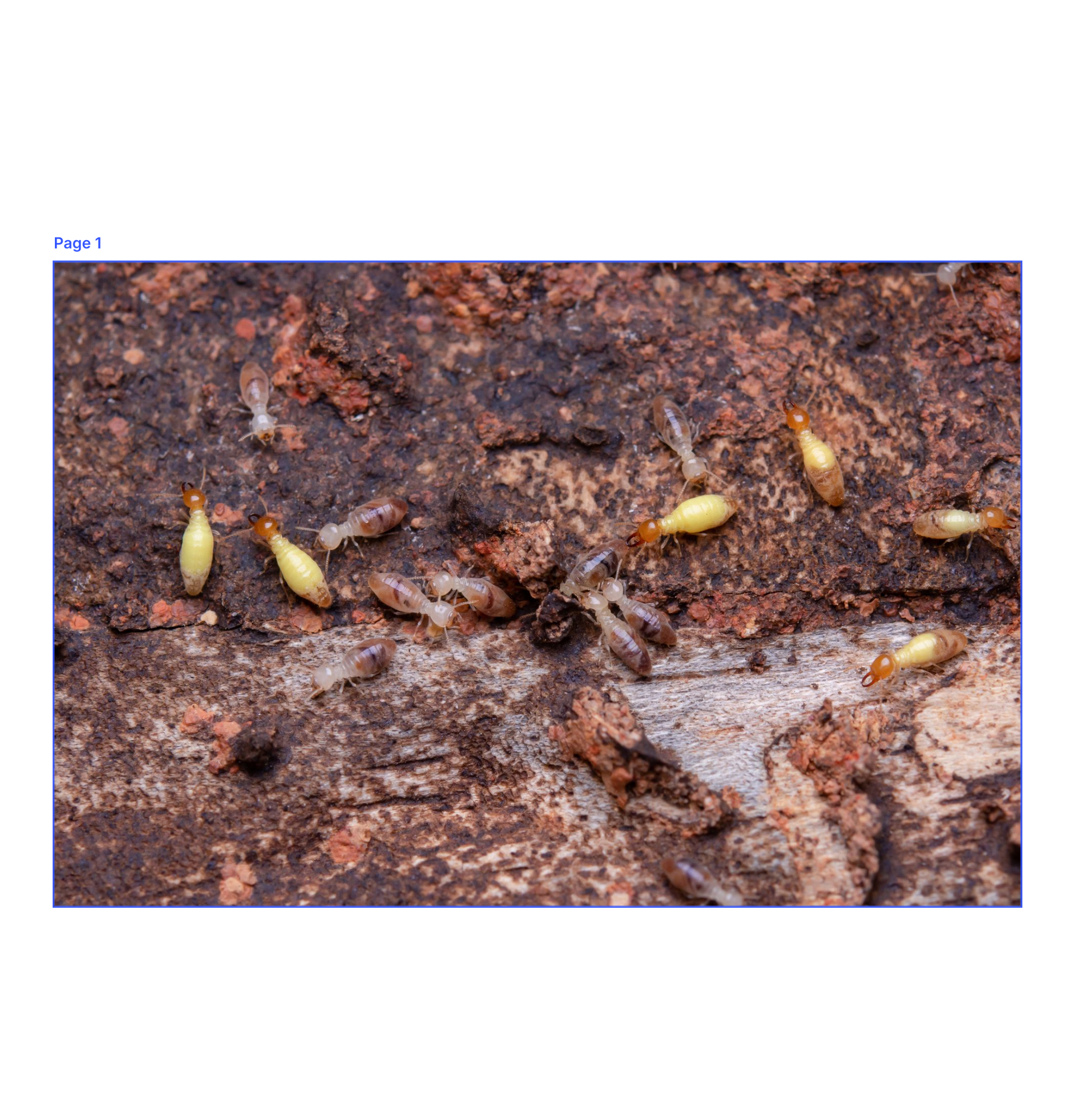
Swarm Season Ends, but the Threat Doesn't A termite swarm is not the infestation. It is the colony's reproductive event, the moment when winged termites leave an established nest to start new colonies elsewhere. Those swarms are timed to spring on Long Island, which is why that is when homeowners notice them. But the colony that produced the swarm does not go anywhere. It stays exactly where it was, and its workers continue tunneling and feeding on wood twenty-four hours a day, through summer, through fall, and straight through the winter in the protected warmth beneath a home. In other words, the absence of visible termites is not evidence of safety. A colony can consume wood inside a Suffolk County home for years without ever producing a swarm the homeowner happens to catch. By the time damage becomes obvious, that quiet feeding has usually been underway for a long time. Meet the Subterranean Termite The termites responsible for the overwhelming majority of damage on Long Island are subterranean termites, and their name explains why they are so easy to miss. They nest in the soil around and beneath a home and travel up into the structure through mud tubes, pencil-width tunnels of soil and saliva that let them reach wood without exposing themselves to open air. They avoid light and rarely surface where anyone can see them. This underground lifestyle is exactly what makes them so destructive. A colony can number in the hundreds of thousands, and it feeds continuously on the structural wood that holds a house up, hollowing out beams and framing from the inside while the surface looks perfectly intact. Because subterranean termites work out of sight, most Suffolk County homeowners have no idea they share their home with a colony until the damage is already significant. The Quiet Signs of Active Termite Damage Termites rarely announce themselves, but they do leave clues for anyone who knows what to look for. The mud tubes described above, running along foundation walls, in crawl spaces, or where the structure meets the soil, are among the clearest signs of active subterranean termites. Wood that sounds hollow when tapped, paint that looks blistered or bubbled, floors that feel unexpectedly soft, and doors or windows that suddenly stick can all point to feeding behind the surface. Another telltale sign appears after a swarm has already happened, even one you never witnessed. Discarded wings, small and translucent, collected on windowsills or near light fixtures often indicate that a colony is established in or very near the home. None of these clues is dramatic on its own, which is exactly why they are so easy to dismiss until the underlying damage is severe. Why Moisture Makes Long Island Homes Vulnerable Subterranean termites depend on moisture to survive, and that dependence shapes where they thrive. Damp soil against a foundation, poor drainage, leaking gutters, and humid, unventilated spaces beneath a home all create the conditions termites look for, giving them an easier path to the wood above. Many Long Island homes offer these conditions without their owners ever realizing it, particularly older properties and those with chronic moisture issues around the foundation. This is why termite protection and overall moisture management go hand in hand. Reducing the dampness that draws termites toward a structure removes part of the invitation, and it is one of the reasons a professional inspection looks closely at the conditions around and beneath a home, not just at the wood itself. Why Professional Termite Protection Makes the Difference Termites are not a pest a homeowner can manage with a can of spray from the hardware store. By the time damage is visible, the colony is well established, and reaching it means understanding how these insects move through the soil and into the structure. That is where professional experience is essential. Pestify technicians know how subterranean termites behave in Suffolk County homes, where to look for the quiet signs of activity, and how to build a protective barrier that addresses the colony rather than the few insects a homeowner might stumble across. Just as important is the ongoing nature of the threat. Because termites feed year-round and a treated home can face renewed pressure from colonies in the surrounding soil, lasting protection depends on regular inspection and monitoring, not a single visit. As a family-owned company serving Long Island, we design our termite treatments to be effective against the colony while remaining safe for your family and pets, so defending your home never introduces a new worry inside it. The most dangerous thing about termites is how easy they are to forget once swarm season ends. If it has been more than a year since your home was inspected, or if you have never had it checked at all, this is the time to change that, before quiet damage becomes an expensive repair. To schedule a termite inspection, contact Pestify at 631-681-5581 or visit pestifyli.com . Our experienced technicians serve Port Jefferson and communities throughout Suffolk County with the reliable, family-focused service you can trust, and new residential customers can start with a free first spray.

Why Bed Bugs Are a Late-Summer Problem on Long Island Bed bugs do not have a true season the way mosquitoes or ticks do. What they have is a travel season, and late summer is its peak. Hotels, rentals, dorms, and shared transportation all see heavy turnover in August, which gives bed bugs more chances than usual to move from one set of belongings to another. For Suffolk County families, two overlapping events make this window especially risky. The first is end-of-summer vacation, when suitcases spend nights in unfamiliar rooms. The second is college move-in, when students haul mattresses, bedding, and secondhand furniture into dorms and apartments, then bring it all home again for breaks. Both are perfectly ordinary. Both are also exactly how a bed bug travels into a Long Island home without anyone noticing. How Bed Bugs Travel Into Suffolk County Homes Bed bugs are hitchhikers, not fliers or jumpers. They cannot cross a yard on their own, so they rely entirely on being carried. A single bug or a few eggs tucked into the seam of a suitcase, a backpack, or a folded jacket is all it takes, and from there they settle into a bedroom and begin to multiply. Luggage placed on a hotel bed or floor, secondhand furniture, and shared laundry facilities are among the most common ways they make the trip. College students returning home are a particularly frequent source, simply because dorm life combines high turnover, shared spaces, and a lot of moving belongings. None of this reflects carelessness. It reflects how easily these insects exploit ordinary daily life. The Early Signs Most People Miss Bed bugs are experts at staying hidden, which is why so many infestations go unnoticed until they are well established. The bugs themselves are small, flat, and reddish-brown, and they retreat into mattress seams, box springs, headboards, and cracks near the bed during the day. The signs are often easier to spot than the insects. Small reddish or rust-colored stains on sheets and mattresses, tiny dark spots that look like specks of ink, and a faint musty odor in a heavily affected room are all common indicators. Many people first notice bites, which tend to appear in small clusters or lines on skin exposed during sleep. Because those bites are easy to mistake for mosquitoes or an allergic reaction, the underlying cause frequently goes unrecognized until the population has grown. Why Bed Bugs Are So Hard to Get Rid of on Your Own Few pests frustrate homeowners more than bed bugs, and for good reason. They hide in places that are almost impossible to reach, they can survive for months without feeding, and their eggs resist many over-the-counter sprays entirely. Store-bought treatments often kill the bugs a homeowner can see while leaving eggs and hidden insects untouched, so the population rebounds within weeks. Worse, incomplete treatment can scatter bed bugs into new areas of the home as they move away from whatever was applied. That is how a problem contained to a single bedroom spreads down a hallway and into a second room. Getting rid of bed bugs is not about a single spray. It is about a thorough, methodical process that reaches every stage of the infestation. How Pestify Handles a Bed Bug Problem the Right Way When you call Pestify about a possible bed bug issue, we begin with a careful inspection to confirm what you are dealing with and to map exactly where the insects are hiding. That step matters, because effective treatment depends on knowing the full extent of the problem rather than guessing. From there, our technicians apply a targeted treatment plan designed to eliminate bed bugs at every stage, including the eggs that DIY efforts so often miss, followed by the monitoring needed to confirm the problem is truly gone. As a family-owned company serving Suffolk County, we know that bed bugs are as stressful as any pest we treat, and we handle every visit with discretion and care. Our treatments are designed to be safe for your family and pets, so reclaiming your bedrooms never means creating a new worry in the process. Before you unpack from that last summer trip or welcome a college student home, take a few minutes to check the seams of your luggage and inspect the mattress. And if something does not look right, do not wait for the problem to grow. Contact Pestify at 631-681-5581 or visit pestifyli.com to schedule an inspection. Our experienced technicians serve Port Jefferson and communities throughout Suffolk County, and new residential customers can start with a free first spray.

As the long days of summer begin to shorten across Suffolk County, most Long Island homeowners are still thinking about beach afternoons and one last round of backyard barbecues. Mice are thinking about something else entirely. While the weather is still warm, rodents are already scouting the outside of your home, testing gaps and mapping out where they will spend the winter. The choices you make in late summer decide whether that winter address turns out to be your house. At Pestify, we see the same pattern every year across Port Jefferson and the surrounding towns. The calls that flood in each November almost always trace back to openings that were there in August. By the time a homeowner hears scratching in the walls, the problem has usually been building quietly for weeks. The Late-Summer Timeline Most Homeowners Miss Rodents do not wait for the first frost to move indoors. As nights start cooling and natural food sources begin to thin out, mice and rats become far more motivated to find shelter that offers warmth, food, and a safe place to nest. That shift begins in late summer, well before most people are thinking about pests at all. This is what makes August and September the most valuable weeks on the pest control calendar. Rodent-proofing your home now, while activity is still low, is prevention. Waiting until you hear movement in the attic means you are dealing with an established population instead. On Long Island, where older homes and mild coastal winters give rodents plenty of opportunity, that head start matters more than most homeowners realize. How Mice and Rats Actually Get Inside a Suffolk County Home The most common reaction we hear during an inspection is disbelief that a mouse could fit through such a small gap. A house mouse can squeeze through an opening the width of a dime, and a rat needs only about the size of a quarter. That means the vulnerabilities on a typical Long Island home are rarely dramatic. They are the small, easy-to-overlook details that add up. Gaps around utility lines and pipe penetrations, worn weather stripping under exterior doors, unscreened vents, deteriorated foundation mortar, and openings where the roofline meets the siding are all standard entry points. Garages are an especially frequent culprit, since an imperfect door seal offers a wide, ground-level invitation. Once a rodent finds one of these paths, it leaves a scent trail that draws others in behind it. The Damage That Starts Before You Ever See a Mouse By the time a homeowner spots a mouse in the kitchen, the activity behind the walls has often been underway for some time. Rodents are constant gnawers, and their teeth never stop growing, so they chew through insulation, wood, and stored belongings to keep them worn down. More concerning, they gnaw on electrical wiring, which is a genuine and underappreciated fire risk in Long Island homes. There is a health dimension as well. Mice and rats contaminate the surfaces and food they travel across, spreading bacteria and allergens through droppings and urine as they move. And because rodents reproduce quickly, a small intrusion in early fall can become a full infestation by the holidays. Prevention is not just cleaner and easier than removal. It is dramatically less expensive than repairing chewed wiring or replacing contaminated insulation. Why DIY Traps Fall Short Snap traps and store-bought baits have their place, but they address the mouse you can see rather than the reason it got in. A trap in the pantry does nothing about the gap behind the dishwasher that let the rodent enter, and it does nothing about the next mouse following the same scent trail. Homeowners often spend an entire fall emptying traps without ever getting ahead of the problem, because the entry points remain wide open. Effective rodent control works in the opposite order. It starts by sealing the home so new rodents cannot get in, then removes any that are already present. That sequence, known as exclusion, is what separates a temporary dip in activity from a lasting solution. Why Professional Rodent-Proofing Makes the Difference A Pestify rodent-proofing service begins with a thorough inspection of your home's exterior, where our technicians identify the specific vulnerabilities most homeowners walk past every day. We seal entry points with durable, rodent-resistant materials, address the conditions on your property that attract rodents in the first place, and put a monitoring plan in place so a small issue never has the chance to grow. Because we work in Suffolk County homes year-round, our team knows how local construction styles, coastal moisture, and neighborhood layouts shape where rodents get in. And as with every Pestify treatment, our approach is designed to be safe for your family and pets, so protecting your home never means introducing something you have to worry about indoors. Late summer is the quiet window before rodent season begins in earnest, and it is the easiest, most affordable time to close the door on a winter of scratching in the walls. To schedule a rodent-proofing inspection before the weather turns, contact Pestify at 631-681-5581 or visit pestifyli.com . Our technicians serve Port Jefferson and communities throughout Suffolk County with the reliable, family-focused service you can trust, and new residential customers can start with a free first spray.