WASP CONTROL ON LONG ISLAND.
Found a wasp nest, noticed insects entering a wall, or dealing with aggressive yellowjackets around your property? Pestify provides professional identification, targeted nest treatment, removal when appropriate, and follow-up service throughout Nassau and Suffolk Counties.
Need help today?
WHY WASPS BECOME A PROBLEM ON LONG ISLAND.
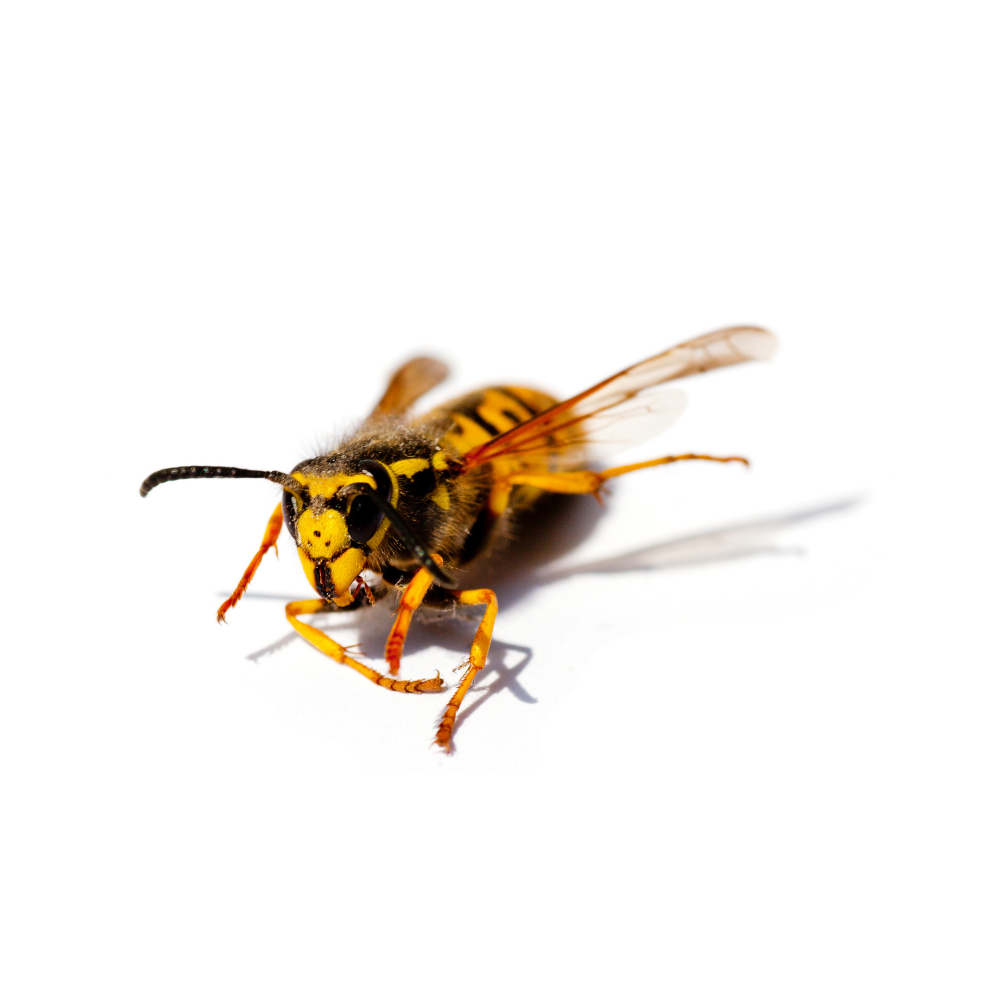
Wasps, hornets, and yellowjackets commonly build nests around rooflines, siding, decks, sheds, trees, shrubs, wall voids, attics, and abandoned ground burrows. Their colonies begin small in spring but may grow significantly throughout the summer as more workers are produced.
A nest located near a doorway, patio, pool, playground, walkway, or busy commercial area can create a serious stinging hazard. Pestify identifies the type of stinging insect, locates the nest, evaluates the surrounding conditions, and develops a targeted treatment plan based on the species and nesting location.
Yellowjackets, bald-faced hornets, and paper wasps are colony-building wasps that may aggressively defend nests located near people. Correct identification is important because different species build nests in different locations and require different management strategies.
OUR WASP CONTROL PROCESS.
Property inspection.
We inspect rooflines, eaves, siding, wall openings, decks, sheds, trees, shrubs, landscaping, ground burrows, utility areas, and other potential nesting locations. We also observe flight patterns to help identify where insects are entering and leaving the nest.
Targeted treatment.
We apply professionally selected treatments to the nest, entrance point, or active area based on the species and nesting location. Treatment may involve exposed nests, ground nests, structural voids, or other protected areas. Products are applied according to label directions.
NEST REMOVAL AND FOLLOW-UP.
Accessible nests may be removed when appropriate after activity has stopped. Nests inside walls, rooflines, or other structural voids may require additional monitoring or corrective work. We provide follow-up recommendations based on the conditions found.
WASP AND STINGING INSECT FACTS.
Most common concerns:
Yellowjackets, paper wasps, bald-faced hornets, and European hornets
Active season:
Activity generally begins in spring and increases through summer and early fall
Size:
Approximately 1/2 inch to more than 1½ inches, depending on the species
Color:
Common species may be yellow and black, white and black, reddish-brown, or orange and black
Risks:
Wasps and hornets can deliver painful stings. Unlike honey bees, many wasps can sting repeatedly. Stings may also cause severe allergic reactions in sensitive individuals
Where they nest:
Ground burrows, wall voids, rooflines, attics, eaves, decks, sheds, trees, shrubs, hollow trees, railings, and other protected locations
How Pestify helps: We identify the stinging insect, locate the nest, evaluate the risk, apply targeted treatment, and provide removal or follow-up recommendations when appropriate
STINGING PESTS FOUND AROUND NASSAU AND SUFFOLK COUNTY PROPERTIES.
Different stinging insects have different nesting habits and levels of aggressiveness. Proper identification helps determine whether treatment is necessary and which approach should be used.
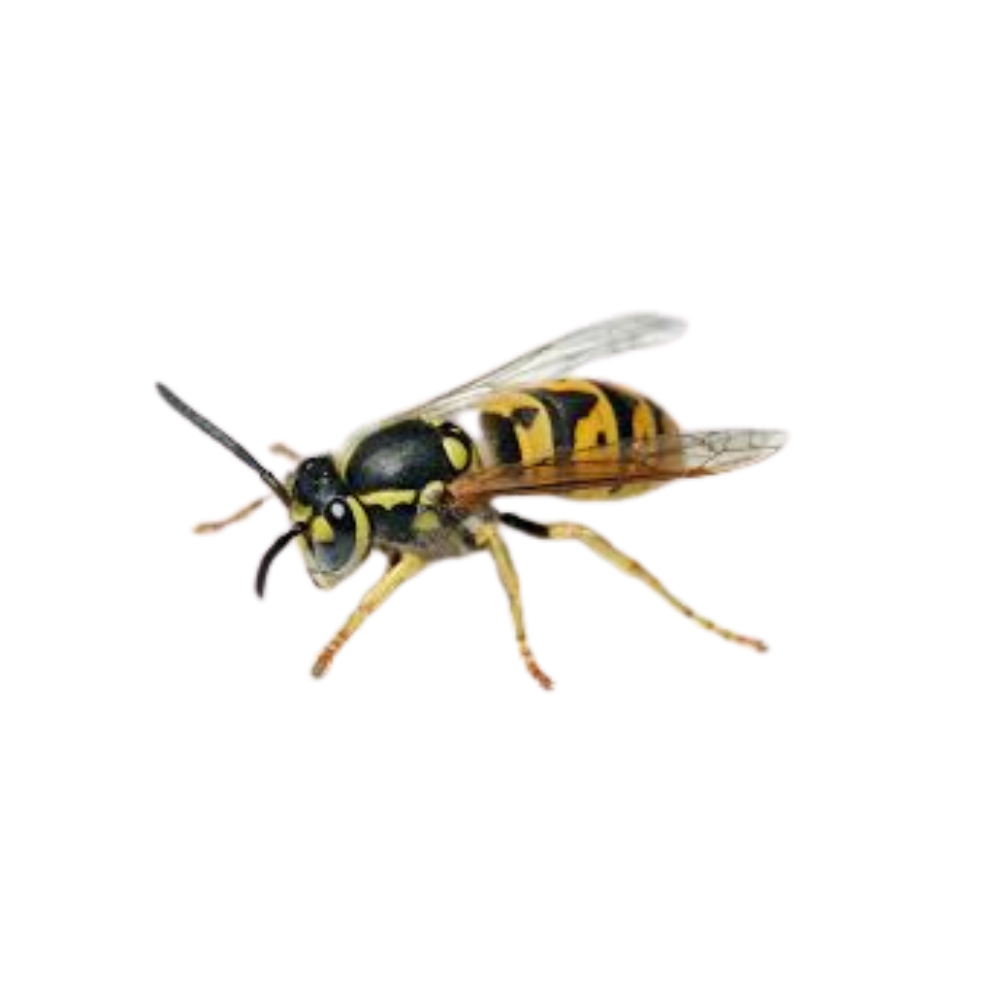
YELLOWJACKET
Vespula species
Yellowjackets are compact, mostly hairless wasps with black-and-yellow or black-and-white markings. Depending on the species, they may build nests underground, inside wall voids, in tree hollows, beneath debris, or inside structures.
They may become especially noticeable around garbage, outdoor food, sweet drinks, patios, and dining areas. Yellowjackets can aggressively defend their nests and sting repeatedly.
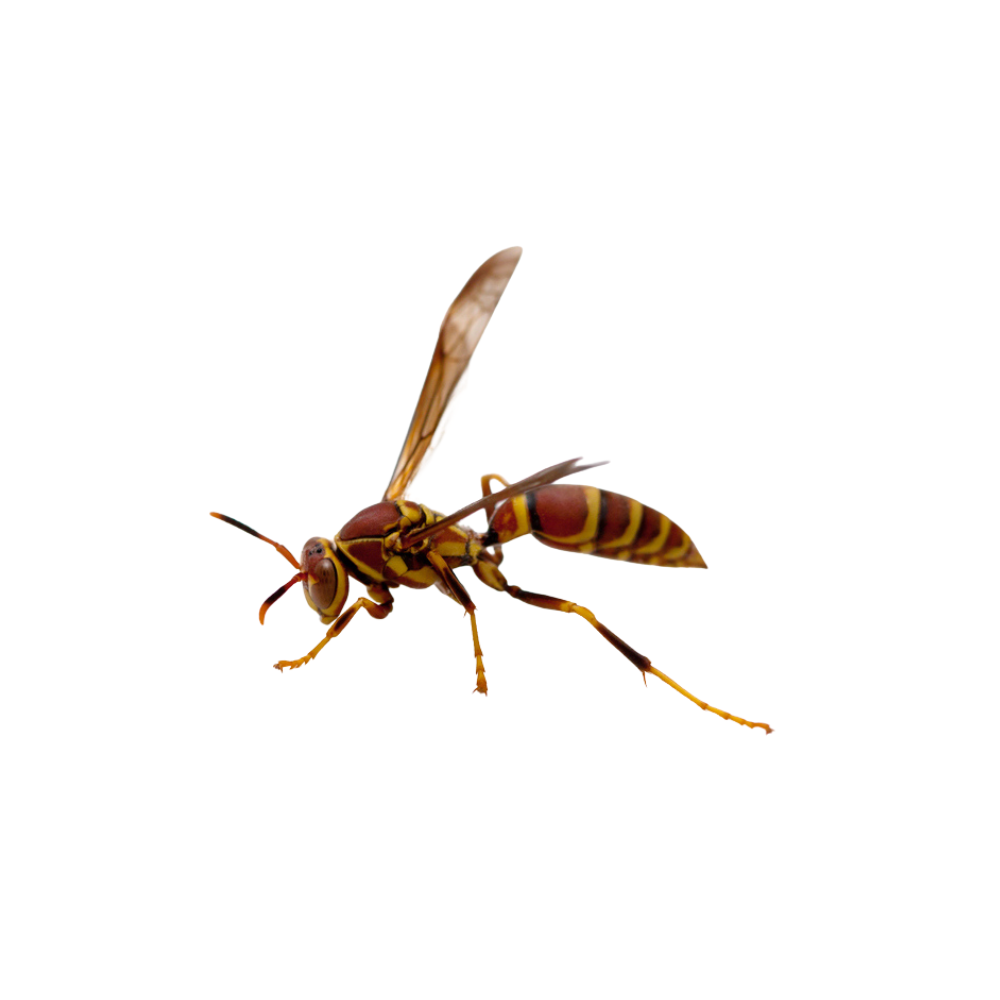
PAPER WASP
Polistes species
Paper wasps have slender bodies, narrow waists, and long legs that often hang beneath them while flying. They build small, open-comb nests beneath eaves, railings, decks, porch ceilings, sheds, grills, play equipment, and other protected surfaces.
Paper wasps are often less aggressive while foraging but may defend a nest when people or pets get too close.
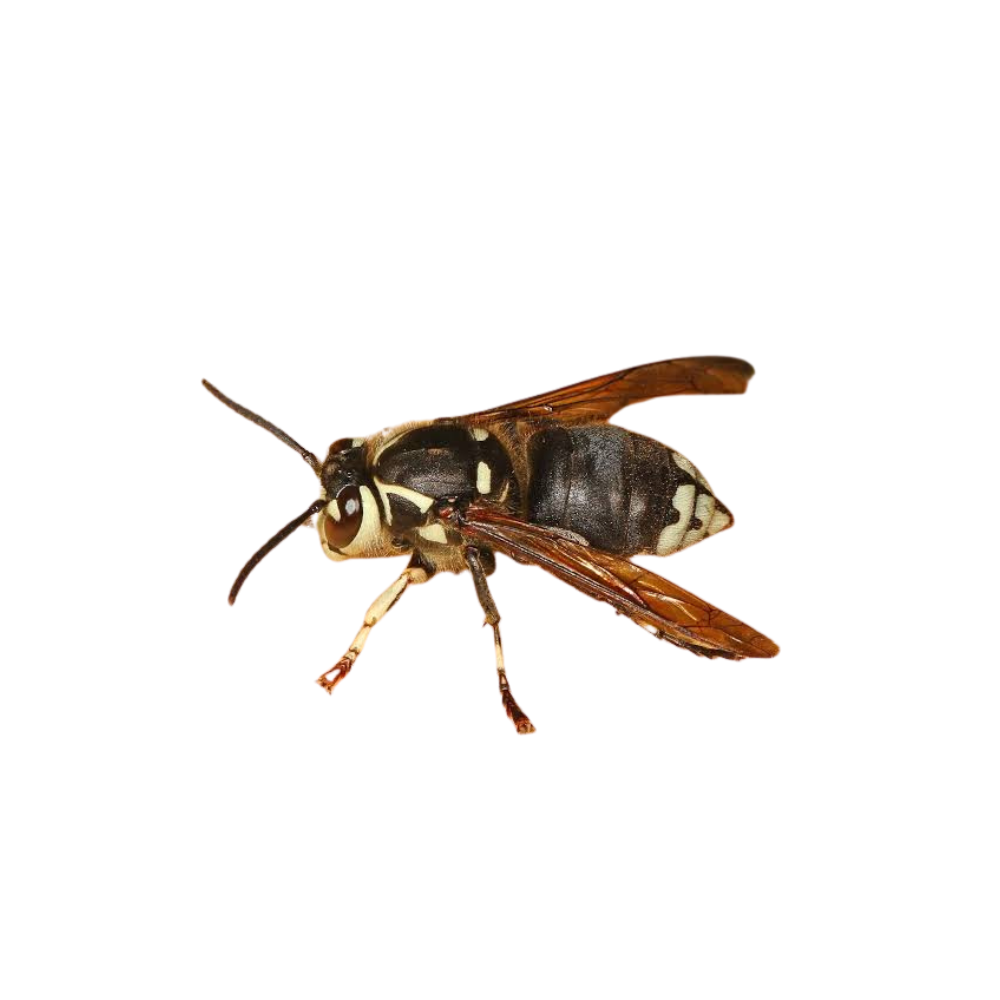
BALD-FACED HORNET
Dolichovespula maculata
The bald-faced hornet is actually a large black-and-white aerial yellowjacket. It constructs an enclosed gray paper nest that may hang from a tree, shrub, utility structure, roofline, or building.
Colonies can become defensive when their nest is disturbed, particularly when the nest is close to regular human activity.
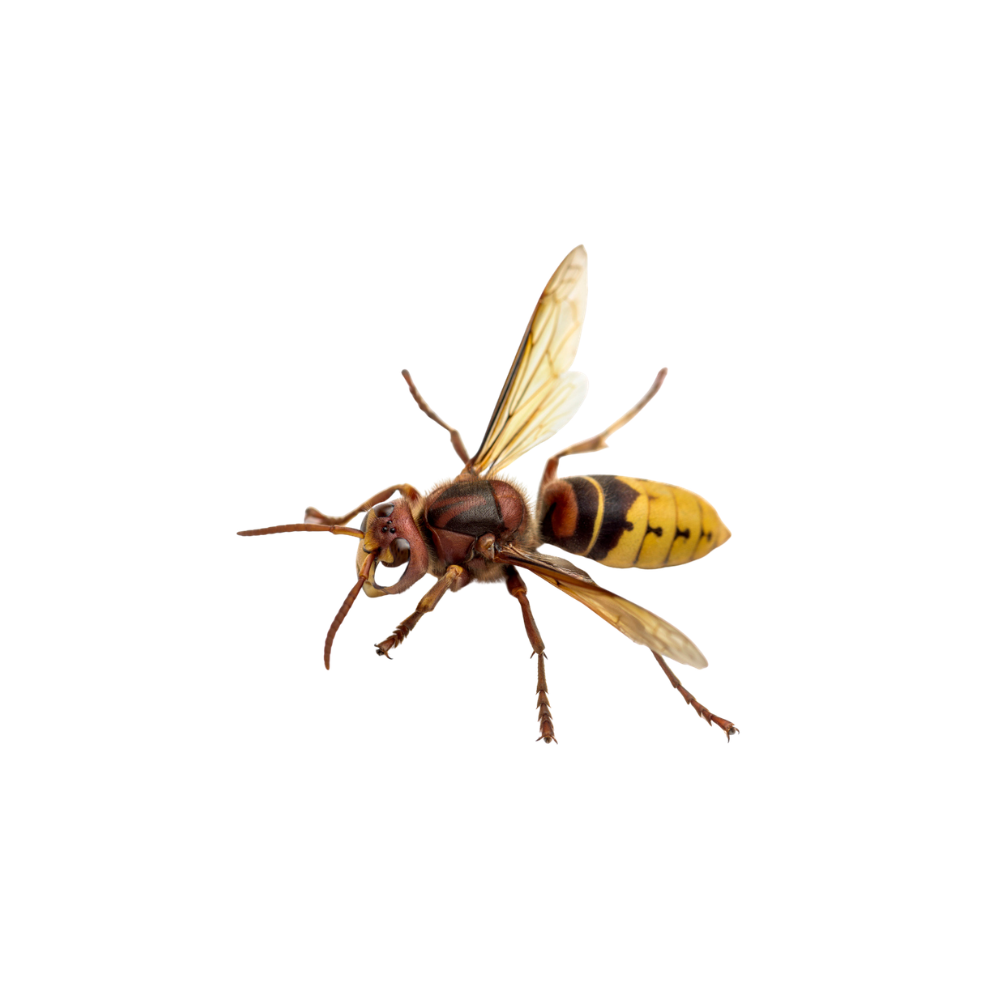
EUROPEAN HORNET
Vespa crabro
European hornets are large, reddish-brown and yellow insects that may reach 1 to 1½ inches long. They commonly nest inside hollow trees, building voids, barns, sheds, and other protected cavities.
They are the only true hornet established in the United States. They may forage after dark and are sometimes attracted to exterior lights, but they are generally most defensive near their colony.
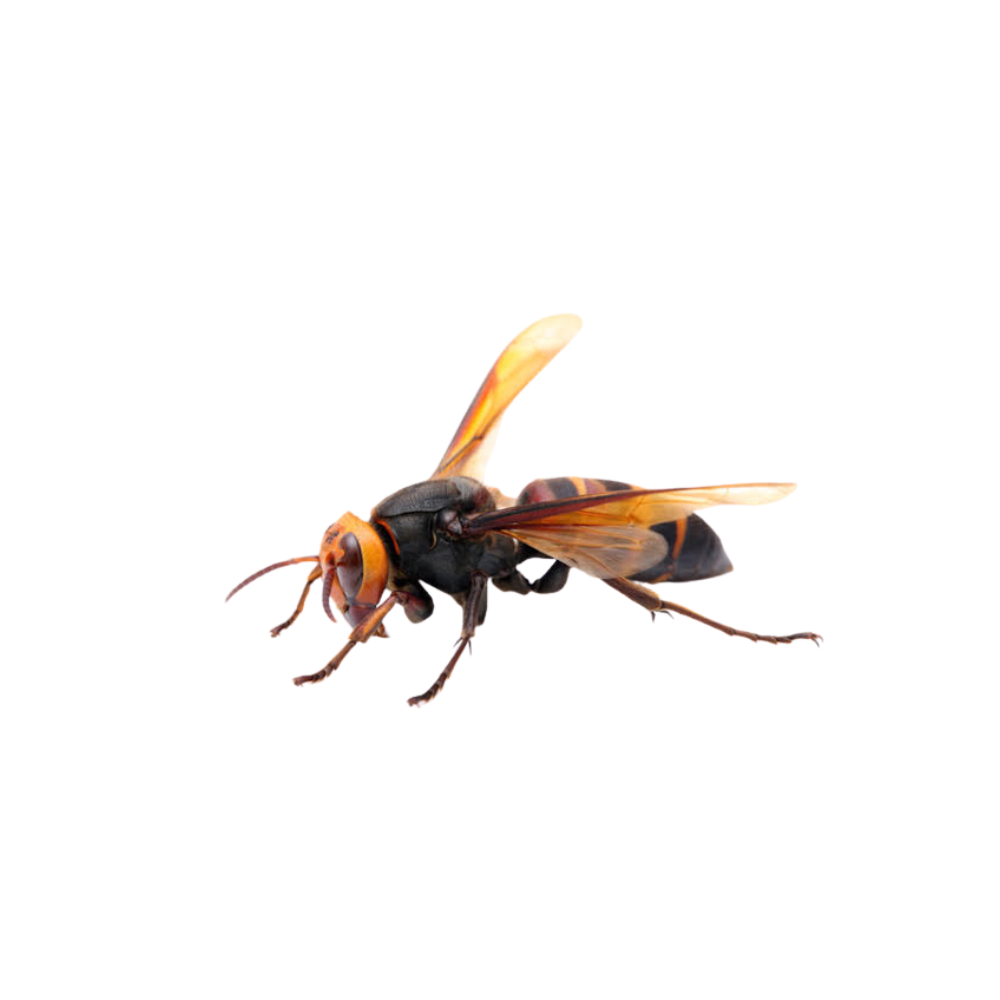
CICADA KILLER WASP
Sphecius speciosus
Cicada killers are very large solitary wasps with dark bodies and yellow markings. Females excavate individual burrows in bare, sandy soil, landscape beds, lawns, and gaps around retaining walls.
Despite their intimidating size, cicada killers are unlikely to sting unless handled or severely provoked. Males may fly toward people while defending territory, but they cannot sting.
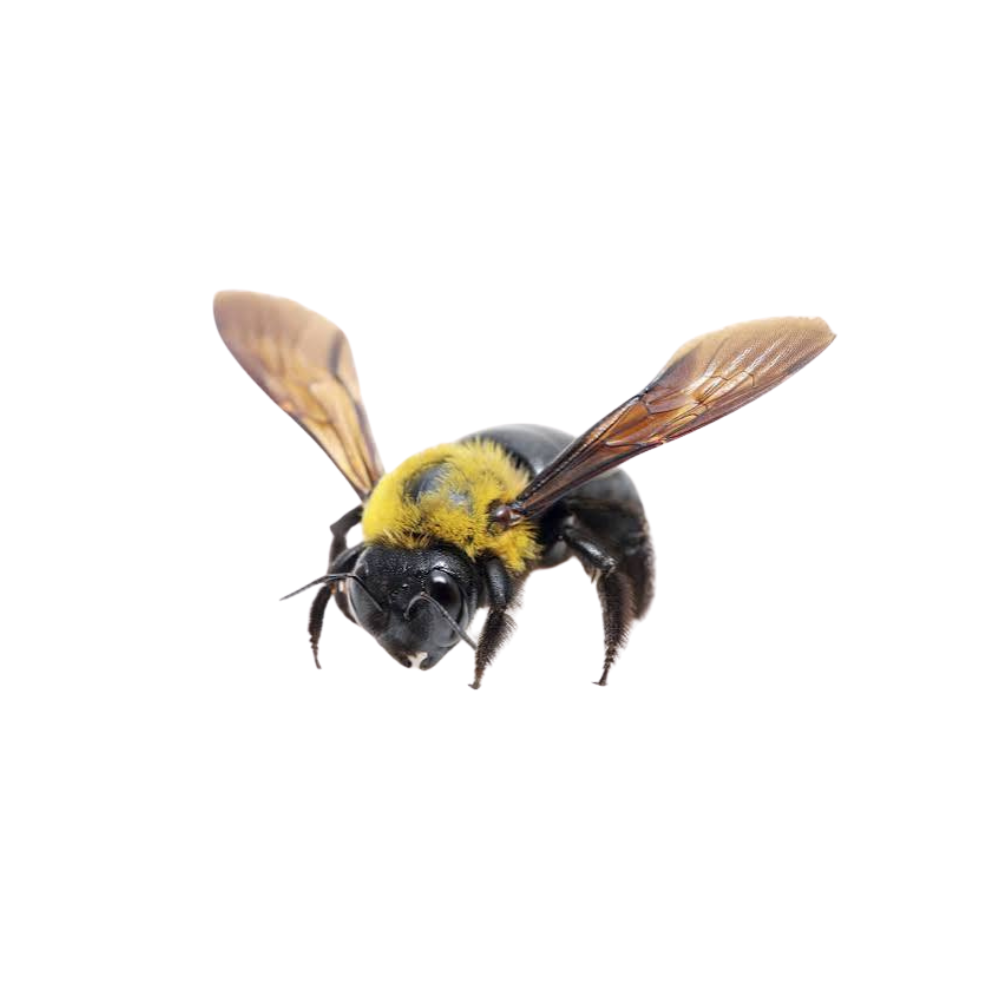
CARPENTER BEE
Xylocopa virginica
Carpenter bees are large, heavy-bodied bees that resemble bumble bees but usually have shiny, mostly hairless abdomens. They create round entrance holes and tunnels inside exposed wood, including fascia boards, decks, railings, sheds, trim, and outdoor structures.
5 THINGS TO KNOW ABOUT WASPS AND HORNETS.
THE TYPE OF INSECT CHANGES THE TREATMENT
Yellowjackets may nest underground or inside structures, paper wasps build exposed combs, and hornets may build enclosed aerial nests or occupy structural cavities. Proper identification comes first.
MANY WASPS CAN STING MORE THAN ONCE
Unlike honey bees, wasps and hornets generally do not leave their stingers behind and may deliver multiple stings while defending themselves or their nest.
NESTS GROW THROUGHOUT THE SEASON
Many social-wasp colonies begin with a single queen in spring. Worker populations increase through summer, making nests larger and more noticeable later in the season.
THE VISIBLE NEST MAY NOT BE THE ENTIRE PROBLEM
Insects entering a crack in siding, a roofline, or a utility opening may be traveling to a nest hidden inside a wall, attic, soffit, or other structural void.
SEALING AN ACTIVE OPENING CAN MAKE THE PROBLEM WORSE
Do not immediately seal a wall or roof opening while wasps are actively using it. Trapped insects may search for another exit and enter the interior of the building. The colony should be evaluated and treated before the opening is repaired.
SIGNS YOU MAY HAVE A WASP OR HORNET PROBLEM.
REPEATED FLIGHT TO ONE LOCATION
You notice wasps consistently entering and leaving the same hole, crack, roofline, tree, shrub, deck, or area of the ground.
A VISIBLE PAPER NEST
You find an open-comb paper-wasp nest or a larger enclosed gray or tan nest attached to a tree, shrub, eave, shed, or other structure.
GROUND-NEST ACTIVITY
Multiple yellowjackets travel in and out of a hole in the lawn, landscape bed, tree stump, retaining wall, or abandoned animal burrow.
ACTIVITY INSIDE THE BUILDING
Wasps appear around windows, light fixtures, ceilings, vents, or upper floors, which may indicate that a colony is nesting inside a wall, attic, soffit, or structural void.
AGGRESSIVE BEHAVIOR NEAR AN AREA
Wasps repeatedly fly toward people, pets, or equipment near a particular part of the property, suggesting that a defensive colony may be nearby.
WASP AND HORNET PREVENTION TIPS.
Prevention cannot guarantee that a nest will not develop, but these steps can reduce attractants and make early activity easier to detect.
SEAL STRUCTURAL OPENINGS
Repair gaps around siding, soffits, rooflines, vents, fascia boards, utility penetrations, windows, and doors during the inactive season.
SECURE GARBAGE AND FOOD
Keep garbage containers closed, clean spills promptly, cover outdoor food and drinks, and remove food waste from patios and dining areas.
INSPECT EARLY IN THE SEASON
Check eaves, decks, sheds, railings, grills, play equipment, and other protected areas during spring when nests are still small.
MAINTAIN LANDSCAPING AND GROUND AREAS
Remove unnecessary debris, fill abandoned burrows when inactive, trim dense vegetation, and monitor soil openings near busy areas.
AVOID DISTURBING ACTIVE NESTS
Do not strike, spray with a garden hose, burn, plug, or attempt to remove a large active nest. Keep people and pets away until it can be properly identified and addressed.

People like us. Pests don’t.
The Pestify Guarantee:
If covered pests come back, we come back.
We're so sure you'll love our service, we guarantee it. If a covered pest shows up between scheduled visits, just give us a call. We'll come back until the pests don't.
FREQUENTLY ASKED QUESTIONS ABOUT WASP CONTROL.
WHAT IS THE DIFFERENCE BETWEEN A WASP, HORNET, AND YELLOWJACKET?
Yellowjackets are a type of wasp. Bald-faced hornets are actually aerial yellowjackets, while European hornets are true hornets. Their appearance, nesting habits, and behavior vary, so identification is important.
WHERE DO YELLOWJACKETS BUILD NESTS?
Yellowjackets may nest underground, inside abandoned animal burrows, within tree hollows, behind siding, inside walls, in attics, beneath debris, or inside other protected cavities.
SHOULD I REMOVE A WASP NEST MYSELF?
Small, newly started nests may present less risk than mature colonies, but any nest near people, high above the ground, inside a structure, or showing heavy activity should be handled by a professional. Cornell recommends professional assistance for large yellowjacket and hornet nests.
CAN WASPS NEST INSIDE WALLS?
Yes. Yellowjackets and other wasps may enter through small structural gaps and build nests inside wall voids, attics, soffits, rooflines, and other concealed spaces.
WILL ONE TREATMENT ELIMINATE THE NEST IMMEDIATELY?
Results depend on the species, nest size, location, access, and treatment method. Some activity may continue temporarily as workers return to the treated area.
SHOULD THE NEST ALWAYS BE REMOVED?
Exposed and accessible nests may be removed after activity has stopped. Nests inside structural voids may not always be accessible without opening the building. The proper approach depends on the location and conditions present.
ARE CICADA KILLERS DANGEROUS?
Cicada killers are large and intimidating but are generally unlikely to sting. Females can sting if handled, while males cannot sting. Treatment may still be considered when large numbers of burrows occur in heavily used areas.
WHAT SHOULD I DO WITH A HONEY BEE SWARM?
Honey bees should not be treated as wasps. A clustered honey bee swarm should be evaluated by a beekeeper or swarm-removal professional whenever possible. Cornell maintains guidance for distinguishing honey bee swarms from wasp and hornet nests.
DOES PESTIFY PROVIDE COMMERCIAL WASP CONTROL?
Yes. Pestify provides wasp, hornet, and yellowjacket inspections and treatments for restaurants, hotels, apartment communities, property managers, warehouses, offices, schools, outdoor venues, and other commercial properties.
Let’s talk about your pest problems.
Send us a message below, or just give us a call at (631) 681-5581.