Carpenter Ants vs. Termites: How to Tell the Difference And Why Long Island Gets Both
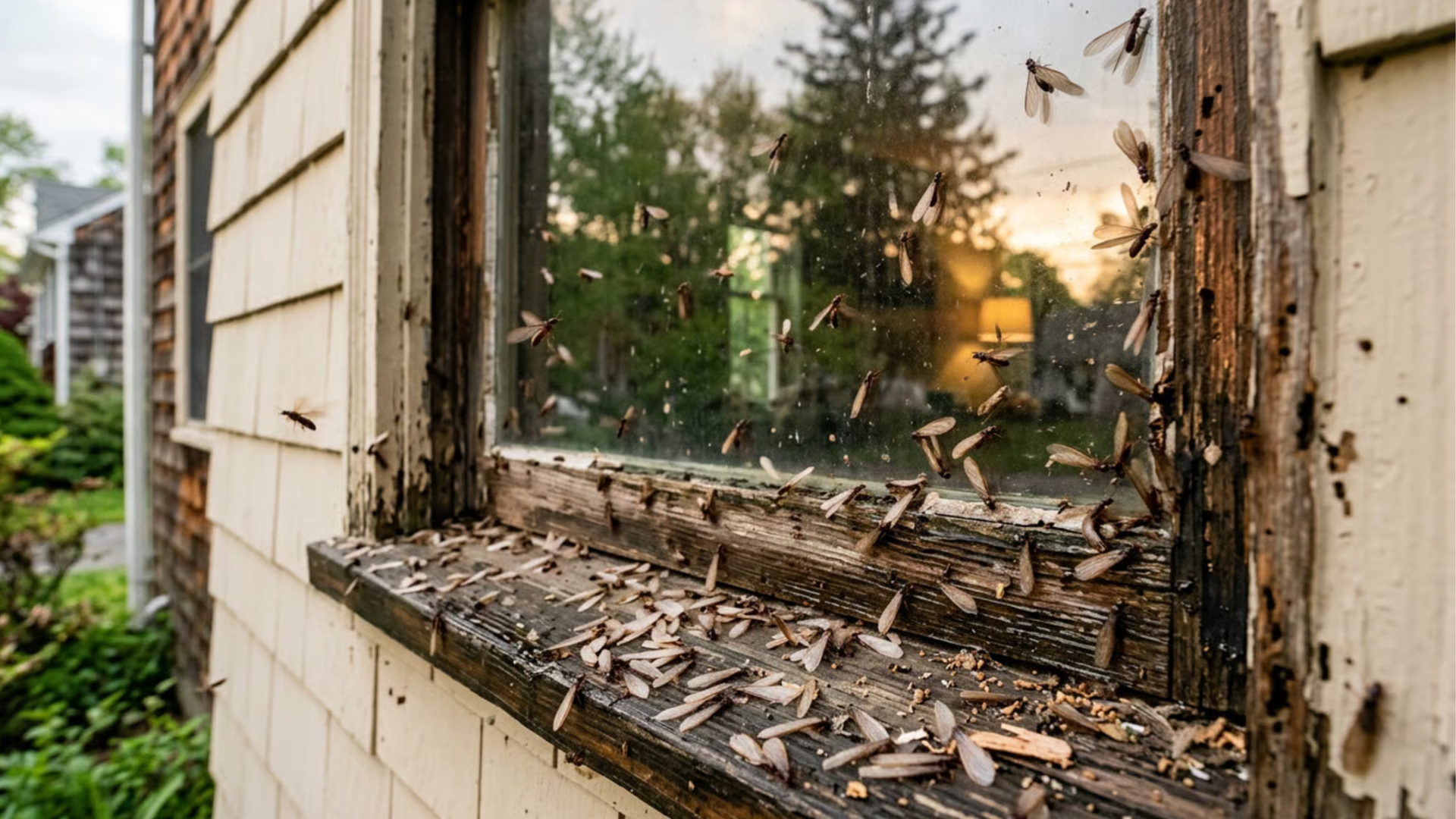
It's a Saturday morning in late March. You're having coffee in your sunroom when you notice something troubling - a small pile of what looks like sawdust on the windowsill, and nearby, several winged insects that look like large ants with wings.
Your stomach drops. Is it termites? You've heard the horror stories from neighbors. Or is it carpenter ants? You're not even sure there's a difference, but you know that either way, this can't be good.
You grab your phone and start searching. The images online all look vaguely similar. The advice is contradictory. Some sites say carpenter ants are "just as bad as termites," while others say they're "nowhere near as destructive." One forum suggests you can handle it yourself with spray from the hardware store. Another warns that DIY treatment will just make the problem worse.
Here's what you need to know: both carpenter ants and termites can cause serious damage to Long Island homes, but they're very different pests that require different approaches. And unfortunately for us Long Island homeowners, our climate, geography, and housing stock make us susceptible to both.
Let's clear up the confusion once and for all.
Why Long Island Is Prime Territory for Both Pests
Before we get into identification, it's important to understand why we're dealing with this double threat. Long Island isn't just randomly unlucky - our environment creates ideal conditions for both carpenter ants and termites.
Our Climate Is Perfect (For Pests)
Long Island sits in a humid subtropical to humid continental climate zone, moderated by our proximity to the Atlantic Ocean and Long Island Sound. This gives us:
- Humid summers with average humidity levels of 65-75%
- Moderate winters where soil rarely freezes solid for extended periods
- Abundant rainfall averaging 44-47 inches annually
- Moisture-retentive soil that stays damp throughout much of the year
Both carpenter ants and termites thrive in humidity. Carpenter ants specifically seek out moisture-damaged wood. Termites need soil moisture to survive and construct their mud tubes. Our climate delivers both.
Our Soil Composition
Much of Long Island sits on glacial till and outwash - soil that retains moisture well and provides ideal conditions for subterranean termite colonies. Our water table is relatively high in many areas, keeping soil moist year-round.
Nassau and Suffolk Counties have extensive underground termite populations that have been established for generations. Your property doesn't need to "get" termites - they're already in the soil around you, just waiting for opportunity.
Our Housing Stock
Take a drive through any Long Island neighborhood and you'll notice something: we have a lot of wood-frame homes built between the 1950s and 1980s. These homes feature:
- Wood siding (or vinyl siding over wood)
- Wood deck construction attached to the house
- Wood framing throughout
- Basements and crawl spaces that can have moisture issues
- Aging infrastructure where wood-to-soil contact may have developed over time
Add to this our landscape practices - foundation plantings, mulch beds against the house, firewood storage, decorative landscaping timbers - and you've created a buffet for wood-destroying insects.
Coastal Proximity
Living near water means dealing with higher humidity levels and moisture in building materials. Homes within a few miles of the coast - which is most of Long Island - experience salt air, fog, and higher humidity that can contribute to wood moisture content perfect for both pests.
Carpenter Ants - The Moisture Lovers
Let's start with carpenter ants because they're often the first wood-destroying pest Long Island homeowners encounter.
Physical Identification
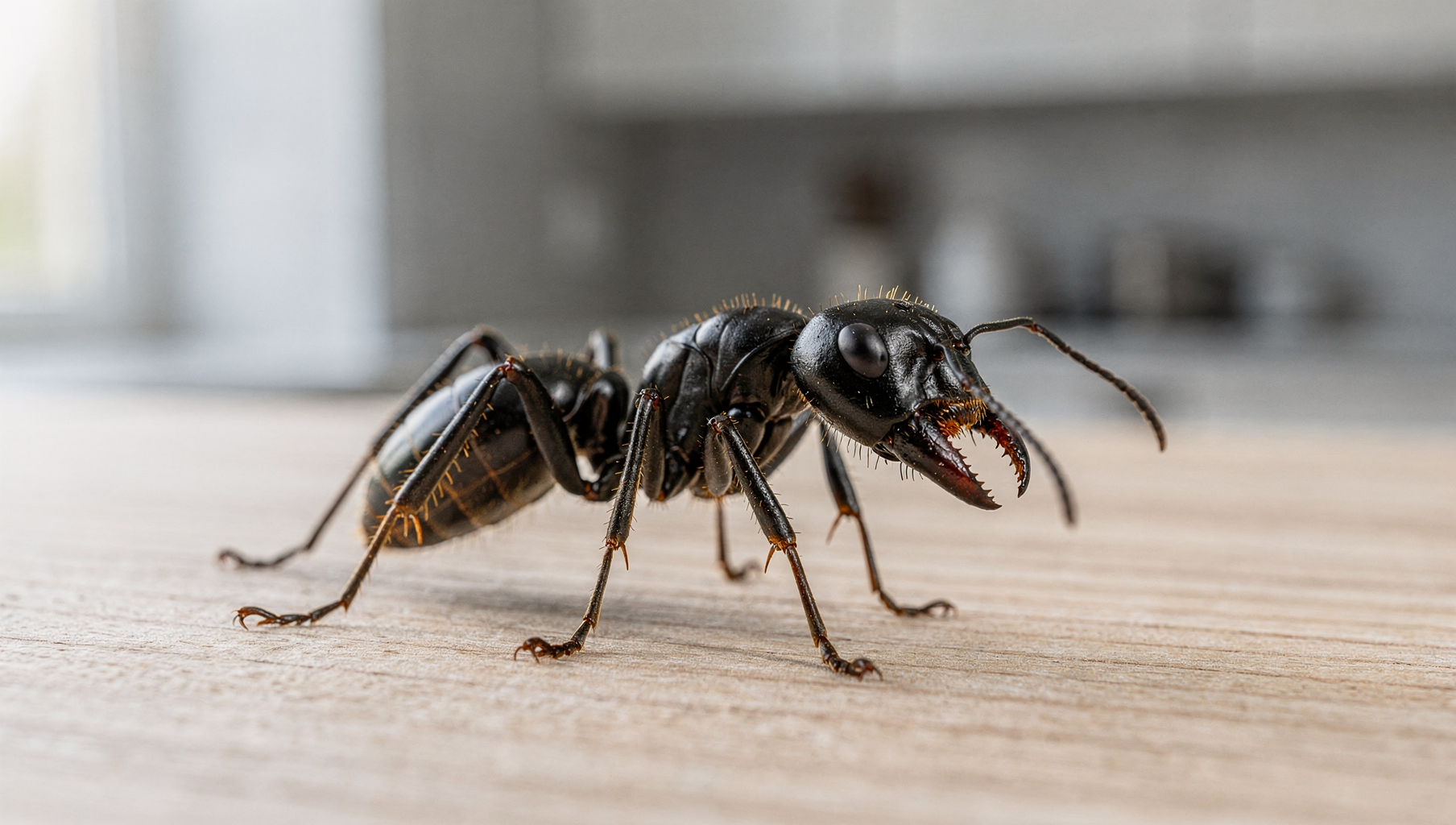
Carpenter ants are large ants, typically 1/4 to 1/2 inch long, making them among the largest ants you'll see around your home. Here's what to look for:
Body Structure:
- Segmented body with a very narrow, pinched waist between the thorax and abdomen
- Color ranges from black to reddish-brown, sometimes bicolored
- Six legs clearly visible
- Bent, elbowed antennae - this is key for identification
Winged Reproductives (Swarmers):
- Appear in spring, typically March through May on Long Island
- Front wings are longer than hind wings - visibly different sizes
- Wings are proportionally smaller relative to body size compared to termites
- After mating, these ants shed their wings, so you might find small piles of wings
What You'll Actually See: Most homeowners don't see the ants themselves at first. They see:
- Frass - sawdust-like material that's actually wood shavings mixed with ant body parts and fecal material
- Rustling sounds in walls, especially at night when carpenter ants are most active
- Trails of ants, usually appearing at dusk, running along baseboards or up walls
Behavior Patterns Specific to Long Island Homes
Carpenter ants don't eat wood - this is the critical distinction from termites. Instead, they excavate wood to create nesting galleries. They're eating the protein and sugars they find around your home (pet food, kitchen spills, outdoor insects) but nesting in your structure.
In Long Island homes, we typically see carpenter ants in:
Areas with moisture damage:
- Window frames where ice dams caused leaks
- Bathroom walls with plumbing leaks
- Attic framing with roof leak damage
- Deck posts and beams
- Garage framing near doors
- Basement sill plates in contact with moisture
Satellite colonies: Carpenter ants establish a parent colony outdoors - often in a tree stump, landscape timber, or woodpile - then create satellite colonies in your home. The satellite colony is where you see the activity.
Seasonal patterns: You'll see peak activity in spring when reproductives swarm and in late summer when colonies are at maximum size. But the colony is active year-round inside your home if established.
Damage They Cause
Carpenter ant damage is slower than termite damage but can be significant over time. They excavate smooth, clean galleries in wood that follow the grain. The wood looks almost polished inside the galleries.
Over months and years, this can weaken structural timbers, joists, and framing. The real concern is when carpenter ants nest in structural members like floor joists, roof rafters, or load-bearing posts.
Peak Activity Months
On Long Island, you'll see carpenter ant swarming typically from late March through May, with peak activity in April. However, established colonies remain active throughout the year inside your home.
Common Entry Points
Carpenter ants are surprisingly agile. They'll enter your home through:
- Cracks in foundation
- Gaps around windows and doors
- Utility line penetrations
- Roof vents and soffits
- Tree branches touching the house
- Firewood brought inside
Termites - The Silent Destroyers
Now let's talk about the pest that strikes fear into every homeowner's heart: termites.
Physical Identification
Eastern subterranean termites are the species we deal with on Long Island. Here's how to identify them:
Body Structure:
- Straight, thick waist - no pinch between thorax and abdomen (looks like a uniform tube)
- Pale, cream-colored to white workers (these are rarely seen)
- Dark brown to black swarmers (winged reproductives)
- Six legs
- Straight, bead-like antennae - not elbowed like carpenter ants
Winged Reproductives (Swarmers):
- Emerge typically in April and May on Long Island, often on warm days after rain
- Wings are equal length - all four wings are the same size, much longer than the body
- Wings are translucent with a slight milky appearance
- Wings are easily shed - you'll often find piles of wings near windows or on windowsills
- They're attracted to light, so they cluster near windows
What You'll Actually See: Most Long Island homeowners never see live termites. You see:
- Mud tubes running up foundation walls, typically 1/4 to 1/2 inch wide
- Shed wings near windows in spring
- Damaged wood that sounds hollow when tapped
- Blistering paint on wood surfaces
- Frass (termite droppings) for drywood termites, though these are less common on LI
How Subterranean Termites Access Long Island Homes
Subterranean termites live in the soil and must maintain contact with moisture. They can't survive exposed to air for extended periods. This is why they build mud tubes - protective highways from soil to wood.
Typical access points:
- Wood-to-soil contact - deck posts, porch steps, door frames, garage framing touching ground
- Foundation cracks - even hairline cracks provide entry
- Expansion joints in concrete slabs
- Behind siding where siding meets foundation
- Through foam board insulation on foundations
- Utility penetrations below grade
The mud tube system: These tubes are made of soil, wood particles, and termite saliva. They provide:
- Protected travel routes
- Moisture retention
- Temperature regulation
- Pheromone trails for colony communication
You'll typically find mud tubes on foundation walls, in crawl spaces, in basements, or on any surface between soil and wood.
Swarming Season Timing
On Long Island, termite swarming season runs from April through early June, with peak activity in late April and early May. Swarms typically occur on warm days (70°F+) after rainfall.
A swarm can involve hundreds or thousands of winged termites emerging from a colony. If you see a swarm inside your home, it means there's a colony in your structure. If you see a swarm outside, there's a colony nearby - possibly near enough to threaten your home.
Why They're Often Missed Until Damage Is Severe
Termites work inside wood, hidden from view. You don't see trails of insects marching across your floor. You don't hear rustling in walls. By the time you notice damage - sagging floors, bubbling paint, hollow-sounding wood - the colony has been feeding for months or years.
This is why annual termite inspections are so important for Long Island homeowners. Professional inspectors know where to look, what signs to check for, and how to spot early indicators that homeowners miss.
Carpenter Ant Damage Signs:
- Frass piles - Looks like fine sawdust, often with insect body parts mixed in. Usually appears below where ants are nesting (they kick it out of galleries).
- Smooth galleries - If you can see into damaged wood, carpenter ant galleries are smooth and clean, following the wood grain. They look almost sanded.
- Rustling sounds - At night, when the house is quiet, you might hear faint rustling or crinkling sounds in walls or ceilings where ants are active.
- Visible ant trails - Usually at dusk or after dark, you'll see ants traveling in trails along baseboards, up walls, or across ceilings.
- Shed wings - In spring, you might find small piles of shed wings near windows or light sources.
- Wood that sounds hollow - Tap suspected areas with a screwdriver handle. Heavily damaged wood sounds hollow.
Termite Damage Signs:
- Mud tubes - Brown, vein-like tubes running from soil to wood, typically 1/4 to 1/2 inch wide. These are the most reliable sign of active termites.
- Shed wings - Much more abundant than carpenter ant wings. Often found in large piles (hundreds) near windows after a swarm.
- Wood damage - Galleries that follow the grain but are rougher than carpenter ant galleries. Wood may look layered or honeycombed. Termites typically leave the outer layer intact while hollowing the interior.
- Blistering or peeling paint - Can indicate termites eating wood beneath the surface while moisture from their activity causes paint to bubble.
- Sagging floors or doors - Advanced damage can cause structural issues like floors that sag or doors that don't close properly.
- Droppings (frass) - For drywood termites (less common on LI), you'll see tiny pellet-like droppings pushed out of holes in wood. Subterranean termites don't produce visible frass.
What to Do If You Suspect Either Pest
First, don't panic. Both carpenter ants and termites are treatable, and if you catch them early, you can prevent serious damage.
Step 1: Try to Identify Which Pest You're Dealing With
Use the comparison guide above. Key questions:
- Did you see the insects? What did they look like?
- Are there mud tubes on your foundation or in your basement?
- What does the damage or debris look like?
- When and where did you first notice activity?
Step 2: Don't Rely on DIY Treatments
This is where many Long Island homeowners go wrong. They see ants, buy spray from the store, kill the ants they can see, and assume problem solved.
Here's why that doesn't work:
For carpenter ants: That spray killed workers from a satellite colony. But the parent colony is outside in your woodpile or tree stump, and the queen in the satellite colony is deep inside your wall where spray can't reach. You've temporarily reduced visible activity but haven't eliminated the colony.
For termites: Retail termite products are essentially useless against established subterranean termite colonies. These colonies contain hundreds of thousands of termites underground. You need professional products and application methods to create effective barriers.
Moreover, incorrect treatment can make the problem worse by causing colonies to split or relocate, spreading the infestation rather than eliminating it.
Step 3: Schedule a Professional Inspection
This is the most important step. A professional pest control inspection for carpenter ants or termites should include:
Comprehensive property assessment:
- Exterior inspection of foundation, siding, windows, doors
- Interior inspection of basement, crawl space, attic
- Moisture assessment
- Identification of conducive conditions
Detailed reporting:
- What pest is present (confirmed identification)
- Extent of infestation
- Locations of activity
- Damage assessment
- Conducive conditions that need correction
Treatment recommendations:
- Specific treatment protocol for the identified pest
- Timeline and expectations
- Cost estimate
- Preventive recommendations
What a Professional Inspection Includes
At Pestify Pest Control, our carpenter ant and termite inspections go beyond just looking for bugs. We're assessing:
For carpenter ants:
- Locating parent and satellite colonies
- Identifying moisture sources attracting them
- Checking for structural damage
- Finding entry points
- Assessing landscape and exterior conditions
For termites:
- Checking all accessible areas where wood meets soil
- Looking for mud tubes on foundations, crawl spaces, basements
- Using moisture meters to find hidden moisture
- Tapping wood to check for hollowness
- Inspecting crawl spaces and substructures
- Checking mulch beds, woodpiles, and landscaping
Long-Term Monitoring Importance
Here's something many homeowners don't realize: both carpenter ant and termite control require ongoing monitoring, especially on Long Island where pest pressure is constant.
For carpenter ants: Even after successful treatment, your property might still have conducive conditions. Nearby trees with colonies can send scouts back to your home. Annual inspections catch new activity before colonies establish.
For termites: Professional termite treatments can last years, but monitoring is essential. Annual inspections ensure your treatment barrier remains effective and catch any new activity quickly.
Think of it like this: you wouldn't get one oil change and assume your car is maintained for life. Pest control is similar - it's an ongoing protection strategy, not a one-time fix.
Pestify's Identification and Treatment Approach
At Pestify, we've seen both carpenter ants and termites in thousands of Long Island homes. Our approach is thorough, science-based, and focused on long-term solutions.
Accurate Identification First
We never treat before we identify. The treatment for carpenter ants is completely different from termite treatment. Using the wrong approach wastes money and doesn't solve the problem.
Our technicians are trained to identify pest species accurately through:
- Visual identification of live or dead specimens
- Damage pattern analysis
- Behavior observation
- Habitat assessment
Carpenter Ant Treatment Protocol
Our carpenter ant treatment is multi-faceted:
- Locate and eliminate colonies - We find parent colonies outdoors and satellite colonies in your structure
- Interior and exterior treatment - Strategic application of professional products that workers carry back to the queen
- Moisture correction recommendations - Addressing what attracted them in the first place
- Entry point sealing - Preventing re-infestation
- Follow-up inspections - Ensuring colony elimination
Termite Treatment Protocol
For termites, we use proven treatment methods:
- Liquid barrier treatments - Creating a protective zone around your foundation that termites can't cross
- Termite baiting systems - Strategic placement of monitoring and bait stations
- Direct treatment - Treating active colonies when identified
- Moisture and conducive condition correction - Recommendations to make your property less attractive
- Annual monitoring - Ongoing inspection and monitoring to ensure protection
Why Professional Treatment Works
Professional pest control products are simply more effective than retail products. We're using:
- Higher concentration active ingredients
- Transfer effects that kill colonies, not just individual insects
- Long-lasting formulations designed for professional application
- Targeted application methods that reach where pests nest
More importantly, we're addressing the underlying conditions that attracted pests and created the problem. Spray alone doesn't fix conducive conditions.
Prevention: Your Best Defense
Whether you're dealing with carpenter ants, termites, or just want to prevent them, these strategies work:
Moisture Control
- Fix leaks promptly
- Ensure good drainage away from foundation
- Use dehumidifiers in damp basements
- Repair roof damage that could cause leaks
- Clean gutters regularly
Eliminate Wood-to-Soil Contact
- No firewood against the house
- Deck posts on concrete footings, not soil
- Landscaping timbers away from foundation
- Mulch at least 12 inches from foundation
- Remove old tree stumps and rotting wood
Seal Entry Points
- Caulk cracks in foundation
- Repair damaged siding
- Seal utility penetrations
- Install weatherstripping on doors and garage doors
- Screen vents
Reduce Attractants
- Don't store firewood near house
- Keep trees and shrubs trimmed away from structure
- Store firewood off ground
- Remove dead trees and stumps from property
- Keep woodpiles small and away from structures
The Bottom Line for Long Island Homeowners
Living on Long Island means living with the reality of both carpenter ants and termites. Our climate, geography, and housing stock make us prime territory for both wood-destroying pests.
The good news? Both are identifiable, treatable, and preventable with the right approach.
The key is accurate identification and professional treatment. Don't guess which pest you're dealing with. Don't rely on DIY treatments that might spread the problem. And don't ignore the warning signs.
If you see winged insects in spring, find sawdust-like material near wood, notice mud tubes on your foundation, or suspect any wood-destroying pest activity, contact a professional immediately.
At Pestify Pest Control, we've protected Long Island homes from carpenter ants and termites for years. We know these pests, we understand their behavior in our local environment, and we know how to eliminate them effectively.
Need help identifying what's in your home? Contact Pestify Pest Control today. Send us photos for a preliminary assessment or schedule a comprehensive inspection. Early detection and proper identification make all the difference in protecting your home and controlling costs.
Don't let carpenter ants or termites turn your home into their buffet. Professional inspection, accurate identification, and effective treatment are just a phone call away.
Pestify Pest Control specializes in wood-destroying pest identification and treatment for Long Island homeowners. Our licensed technicians understand the unique challenges of carpenter ant and termite control in Nassau and Suffolk Counties, and we're committed to protecting your home with science-based treatments and ongoing monitoring.
The Visual Comparison: Side by Side
Let's put these two pests side by side so you can see the differences clearly:
| Feature | Carpenter Ants | Termites | |
|---|---|---|---|
| Body Shape | Narrow, pinched waist | Straight, thick waist | |
| Wings (when present) | Front wings longer than rear wings; proportionally smaller to body | All four wings equal length; much longer than body | |
| Antennae | Bent, elbowed | Straight, bead-like | |
| Waist | Defined, narrow constriction | Broad, no constriction | |
| Color | Black to reddish-brown | Cream/white workers; dark brown/black swarmers | |
| What They Eat | Proteins and sugars (not wood) | Cellulose in wood | |
| Damage Type | Excavate smooth galleries | Eat wood, following grain, leaving rough galleries | |
| Frass/Debris | Require moisture-damaged wood | Fine, pellet-like droppings (drywood); none (subterranean) | |
| Wood Preference | Moist, rotting wood | Sound or damaged wood with soil contact | |
| Moisture Needs | Require moisture-damaged wood | Require soil moisture contact | |
| Colony Location | Often in structure | Underground (subterranean species) | |
| Speed of Damage | Moderate - years to cause serious damage | Fast - can cause significant damage in months | |
| Time of Activity | Primarily nocturnal | Continuous, hidden activity |